
Your feedback, our actions: what Caldicott Guardians told us and how we’re responding
In summer 2025, we invited Caldicott Guardians across the UK to share their experiences and tell us how we (UKCGC) can support Caldicott Guardians more effectively. Over 1,100 Caldicott Guardians responded, representing a wide range of sectors, organisation types and years of experience. Thank you to all who participated.
Last year, we published the initial findings from this survey. Since then, we have carried out additional analysis to draw further conclusions and inform our future work in supporting Caldicott Guardians across the UK.
What we found:
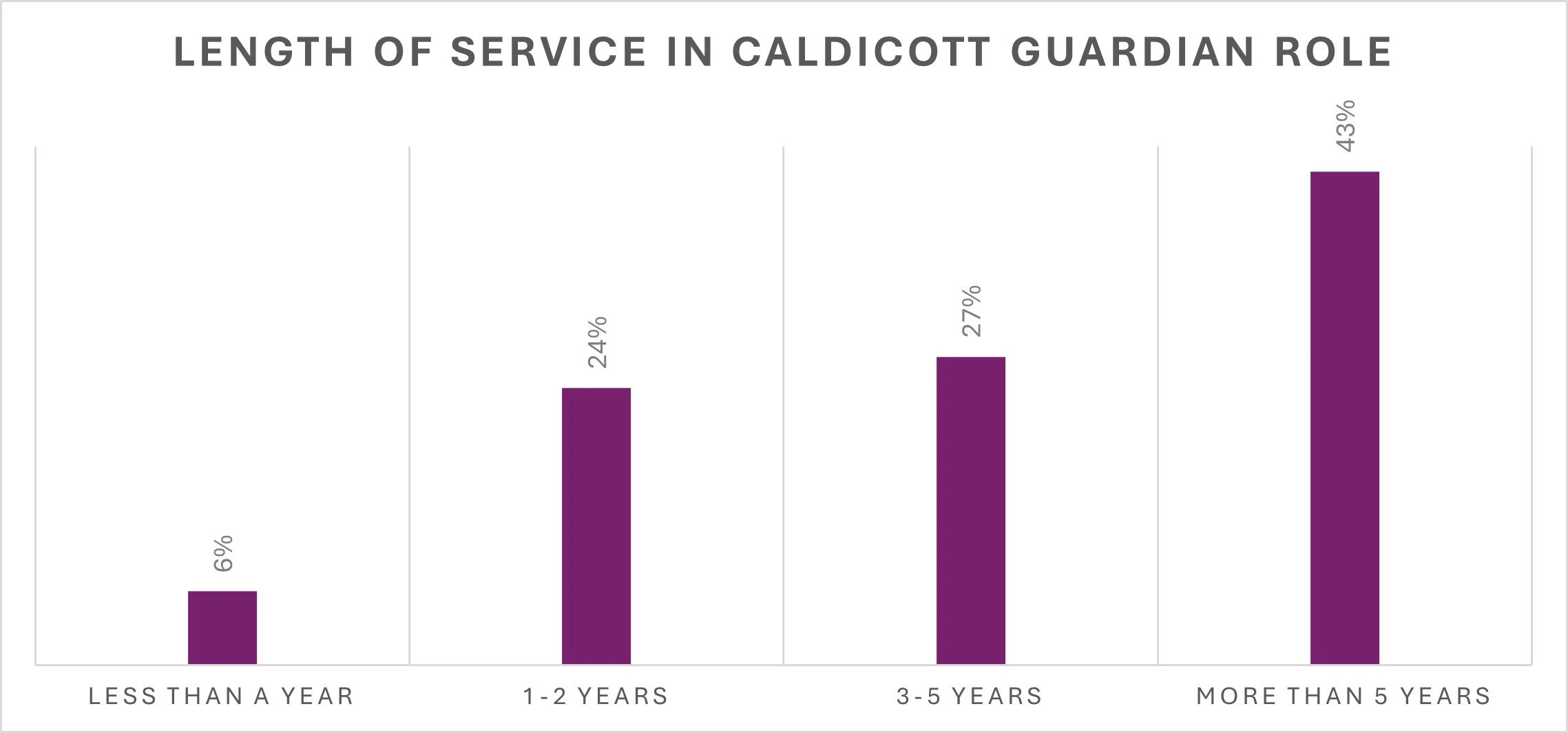
Most Caldicott Guardians are highly experienced: Over 40% of respondents have been in the role for more than five years, whilst 30% are newer (less than two years).
Time spent on the role varies: Nearly 60% spend less than one hour per week on Caldicott Guardian duties. This may be due to varying sizes and demand of each organisation, as well as differing responsibilities alongside the Caldicott Guardian role.
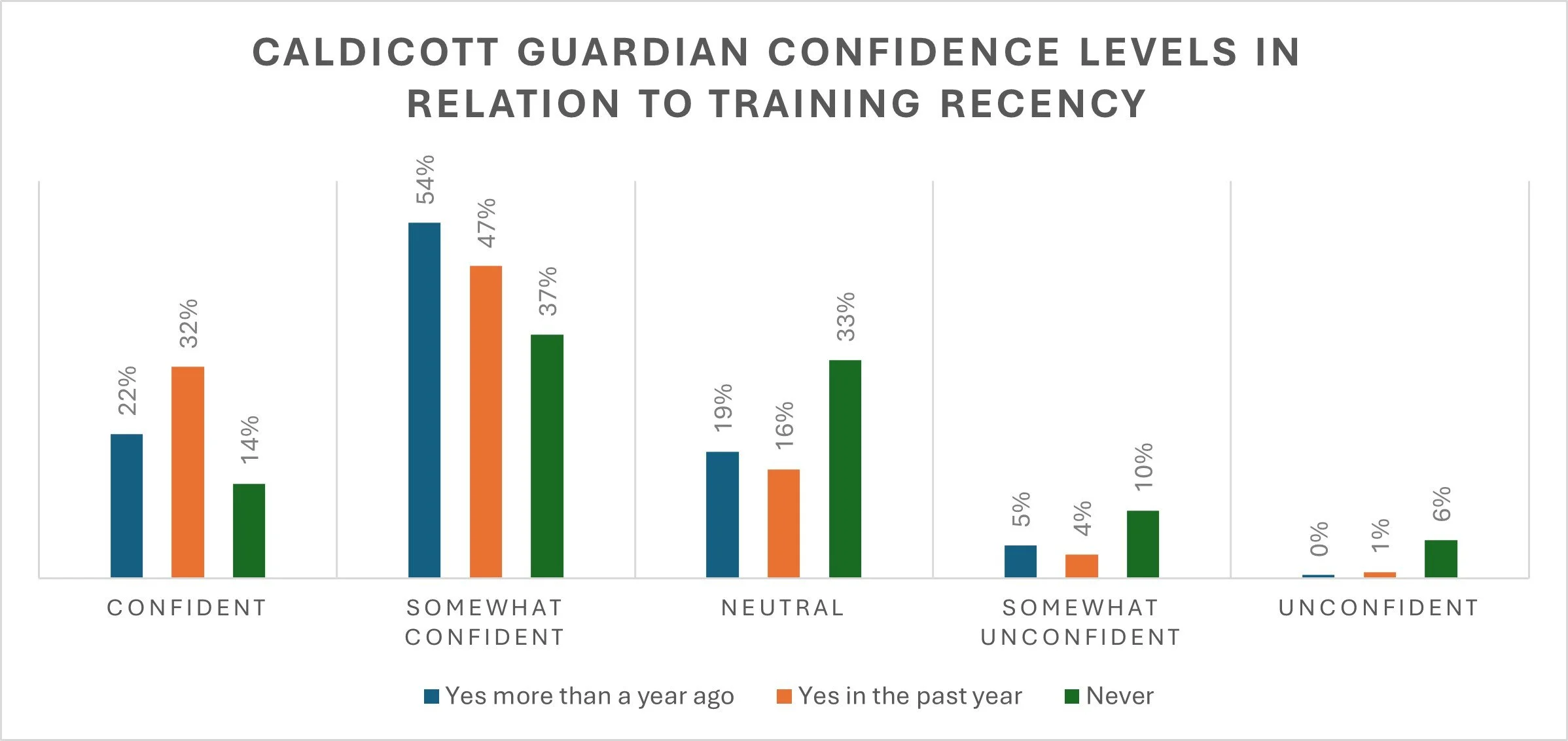
Confidence varies and is closely linked to training: While most respondents feel confident (22%) or somewhat confident (46%) in their role, lower confidence levels are more common among those who are newer to the role or who have never received formal Caldicott Guardian training. Nearly one-third of respondents reported never having had professional development related to their role.
Support for Caldicott Guardians from their organisations is mixed: While most feel their organisation supports them very well (36%), or quite well (31%), a sizeable minority report neutral or poor levels of organisational support.
Core activities are consistent across sectors: The most common tasks related to the role include: advising on disclosures of confidential information (25%), responding to patient or service user complaints (18%), advising on data sharing agreements (15%), involvement in breach investigations (15%), and advising on data protection impact assessments (14%).
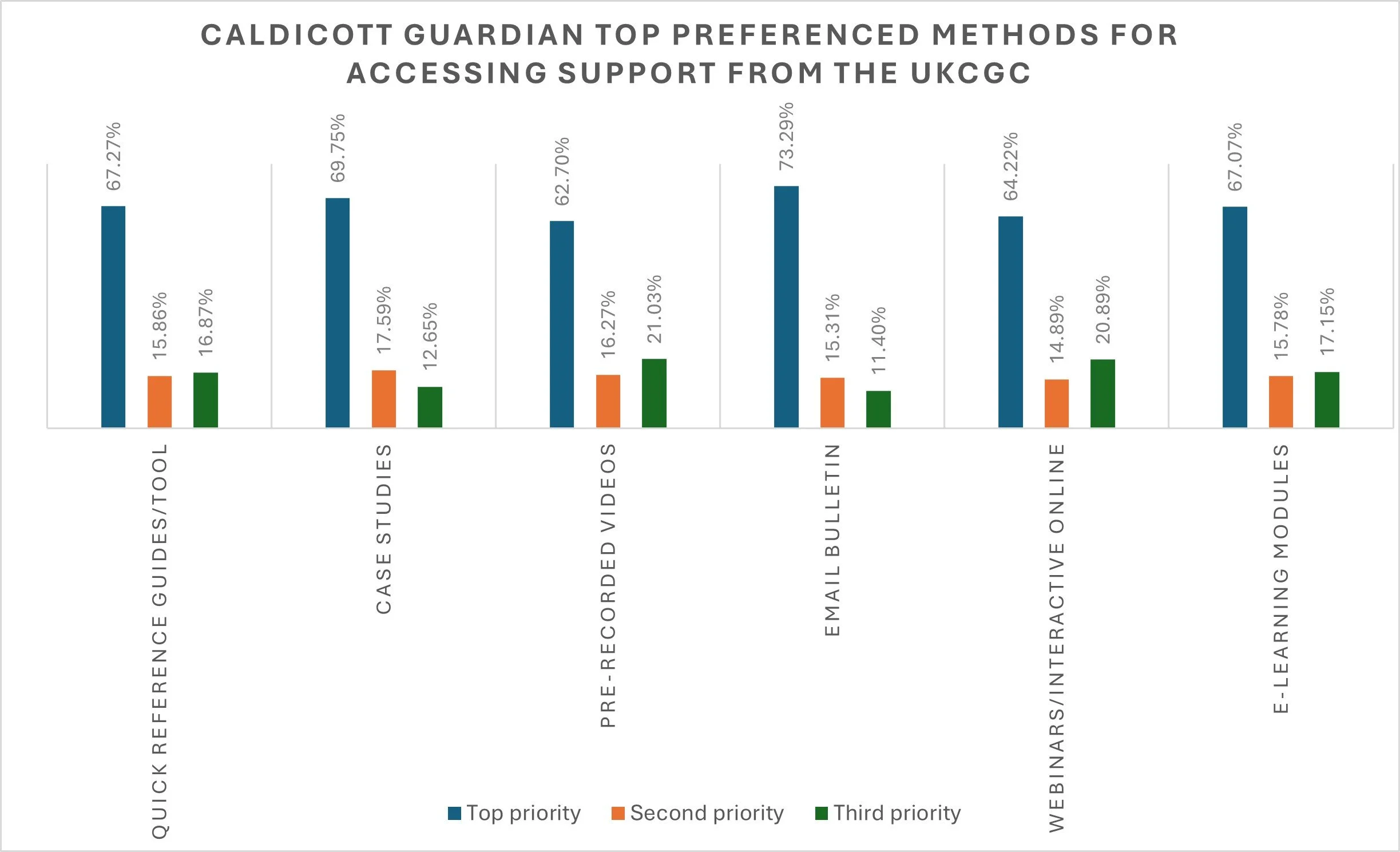
Strong demand for practical, accessible support: Professional development (33%), answers to specific queries (18%), and guidance and written notes (17%) were ranked as the most useful forms of support from the UKCGC. Furthermore, quick reference guides, elearning modules, webinars, and case studies were consistently ranked as the most helpful ways to access support.
Demand for emerging and complex topics: Caldicott Guardians would prefer future guidance to focus on AI and new technology as a priority, followed by information sharing and legal frameworks, safeguarding, and new data policy.
How we will use these findings
Delivering a national, staff-based patient data confidentiality awareness campaign
Partnering with the National Data Guardian, we will explore how best to remind staff that accessing a medical record without cause or consent is a confidentiality breach and can have serious consequences. Over 9 in 10 Caldicott Guardians reported that they are happy to support this campaign in their organisations.
Updating and expanding the current e-learning modules on e-Learning for Healthcare
The strong link between training and confidence, alongside the high proportion of Caldicott Guardians who have never received role-specific development, underlines the need and importance of continuing professional development. These updated modules will support both new and experienced Caldicott Guardians, with a focus on practical decision making, case studies and emerging areas of risk.
Developing a UKCGC podcast
Feedback shows Caldicott Guardians value practical insight, peer learning and discussion of complex or emerging issues, particularly where time is limited. A podcast format will allow us to explore real-life scenarios, emerging risks and opportunities (such as AI and new technology), and shared learning in a flexible, accessible way that fits around busy roles.
Developing new subjects for evening classes and bite-sized learning opportunities
The annual timetable of evening classes includes subjects identified through the consultation.
Refreshing membership and engagement for UKCGC
The analysis of your feedback demonstrates that engagement with some underrepresented sectors may offer opportunities to strengthen support in those areas. Caldicott Guardians in those sectors are being invited to take part in exploratory listening exercises.
Together, these actions will help ensure UKCGC support remains practical and relevant, strengthening confidence in Caldicott Guardians and supporting lawful, ethical and appropriate use of confidential information.